Ilam province draws visitors with lush spring landscapes
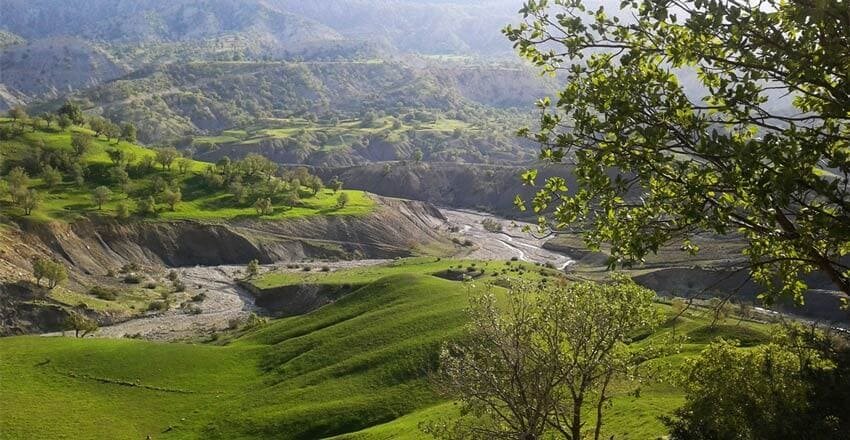
TEHRAN - In western Iran, along a 425-kilometer border with Iraq, Ilam province emerges each spring as one of the country’s most compelling seasonal destinations.
Covering more than 20,000 square kilometers and bordered by the provinces of Kermanshah, Lorestan, and Khuzestan, the region combines deep historical roots with a striking natural landscape. By the month of Ordibehesht (late April to late May), Ilam reaches the height of its beauty, transforming into what many describe as a “paradise of tourism,” where nearly every corner offers a scene worth exploring.
Spring has always been a favorable season in Ilam, but in years of abundant rainfall the province takes on an exceptional character. Mountains and plains become densely carpeted with pasture plants, while trees regain their vivid green foliage. Vast oak forests, interspersed with wild pistachio and other native species, spread across the mountainous terrain, forming shaded landscapes where local communities have long lived in close connection with nature. These forests are not only ecological treasures but also part of the cultural identity of the province.
Recent heavy rains have amplified this natural appeal. Seasonal rivers that are often dry for much of the year begin to flow again, and dormant springs burst back to life. Across Ilam, water redefines the landscape: streams run through valleys, wetlands reappear, and agricultural lands flourish. From the seasonal springs of Eyvan, stretching from Khouran to Chalanji, to the revived Chavar river flowing between Haji Bakhtiar and Abza, the sense of renewal is visible everywhere. The Mishkhas River, a permanent watercourse, gains added vitality along its route from Toulab to Jafarabad, while countless smaller streams and springs contribute to the province’s lush scenery.
This seasonal transformation extends across a wide geographical range. In Mehran, green plains stretch from Salehabad to Seyed Hassan; in Dehloran, fertile lands from Meymeh to Abu Ghoveyr are revitalized; and in Abdanan, dense forests span from Sarab Bagh to Murmuri. The landscapes of Chardavol, Holilan, Malekshahi, and Sirvan counties each present their own variations of springtime beauty, from rolling hills and cultivated fields to rugged mountains and forested valleys. In Darreh Shahr, the Kabirkuh heights rise above a patchwork of greenery, while the Zardalan plains of Holilan display wide expanses of vibrant vegetation.
Among the province’s most notable natural attractions are several sites that reach their peak appeal in spring. Raziane Gorge stands out with its dramatic rock formations and flowing water, while Zinegan Canyon offers a cooler microclimate and shaded pathways carved by streams. The twin lakes of Siah Gav provide a rare and picturesque aquatic landscape, and the slopes of Ghalaghiran near the provincial capital offer sweeping views over the surrounding terrain. Other highlights include Ilam Dam and the nearby village of Ama, the scenic village of Zifel, and the agricultural fields of Dasht Abbas in Dehloran, where uniform rows of blooming canola create striking yellow vistas against the green backdrop.
What distinguishes Ilam in this season is not only the presence of famous landmarks but the accessibility of beauty throughout the province. Visitors do not need to undertake long journeys or reach remote, heavily promoted sites to experience its appeal. Even near the provincial capital, destinations such as Maleseh, Chaghakaboud in Chavar, or the villages of Kini Day (Cheshmeh Davoudi) and Ghajar provide immediate contact with nature. In the Sivan district, for example, travelers can walk through orchards in the village of Meydan and sit beside the Mishkhas River, experiencing a blend of rural life and natural scenery.
Spring in Ilam is also marked by a strong culture of outdoor living. During the Nowruz holidays, many residents set up tents in natural areas and spend extended periods immersed in the landscape. In particularly lush years, some continue this practice well beyond the holiday period, taking advantage of the mild weather and abundant greenery. This tradition reflects both the suitability of the environment for recreation and the deep-rooted relationship between local communities and their surroundings.
Officials in the province underscore that during Ordibehesht, the entirety of Ilam effectively becomes a tourism destination. With ecosystems revitalized and landscapes at their most dynamic, visitors can explore a wide range of environments within relatively short distances. The availability of rural accommodations, including eco-lodges in various villages, further supports tourism by allowing travelers to stay within these natural settings.
Beyond its natural attractions, Ilam’s historical depth adds another dimension to its appeal. The province takes its name from Elam, the ancient civilization that once dominated much of southwestern Iran. Archaeological evidence indicates human settlement in the area dating back to around 5000 BC. Over millennia, the region has been shaped by successive empires, from the Assyrians and Medes to the Achaemenids and Sasanians, owing in part to its strategic location near major cultural and political centers such as Susa and the Zagros highlands.
Today, this combination of history and seasonal natural beauty makes Ilam a distinctive destination. In spring, when rainfall has revived its ecosystems and landscapes, the province offers an immersive experience of Iran’s western highlands, one defined by greenery, flowing water, and a sense of renewal that extends across both nature and tradition.
AM
Leave a Comment